

research
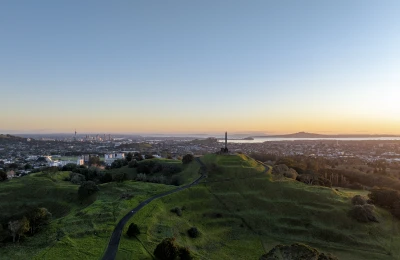
The Tūpuna Maunga (ancestral mountains) and volcanic cones of Tāmaki hold a paramount place in the historical, spiritual, ancestral and cultural identity of the thirteen iwi and hapū of Ngā Mana Whenua o Tāmaki Makaurau.
Rangahau (research) helps us understand the past, present and future of the Tūpuna Maunga. Research undertaken on or about the Tūpuna Maunga must recognise their deep significance to Ngā Mana Whenua o Tāmaki Makaurau and be undertaken in a way that respects and supports their wellbeing.
RESEARCH ON THE TŪPUNA MAUNGA
The Tūpuna Maunga Authority Research Policy sets out the requirements for research involving the Tūpuna Maunga. Research proposals should consider the Tūpuna Maunga Authority values outlined in the Integrated Management Plan:
- Wairuatanga / Spiritual Mana
- Aotūroa / Cultural and Heritage
- Takotoranga Whenua / Landscape
- Mauri Pūnaha Hauropi / Ecology and Biodiversity
- Mana Hononga Tangata / Living Connection
- Whai Rawa Whakauka / Economic and Commercial
- Mana Whai a Rēhia / Recreational
The Tūpuna Maunga Authority supports and celebrates research and creative projects that align with these values.
RESEARCH OPPORTUNTIES
The Tūpuna Maunga Authority supports research and creative projects through the Tūpuna Maunga Authority Research Scholarship, which provides up to $20,000 for research relating to the Tūpuna Maunga, and the Tūpuna Maunga Authority Residency, which provides two two-week paid residencies at the historic Signalman’s Cottage on Takarunga / Mount Victoria.
Find out more about these opportunities, including current applications and previous recipients and their projects, below.
The Research Scholarship funds both new and ongoing projects from a range of fields, including creative arts, social sciences, and applied sciences. Read about our current and past scholarship recipients.
We are pleased to announce that as of 2026, the Authority has partnered with the Māori Education Trust (MET) to increase financial support for research on the Tūpuna Maunga. MET are the largest national scholarship provider for Māori secondary and tertiary students and have awarded 65,000 scholarships since 1963.
The TMA Research Scholarship is jointly funded, with TMA and MET each providing $10,000. Successful applications that meet MET criteria will be jointly funded by the Authority and MET. Successful applicants that do not meet the criteria of MET will be funded solely by the Authority. Applicants can apply for up to $10,000 in funding.
Timeframe
Applications open 29 June 2026 and close 11:59 pm 30 August 2026.
Who is eligible?
- You must be a member of a research or education institution.
- You must be a New Zealand citizen or permanent resident.
- Research must align with the Tūpuna Maunga Authority Research Policy and approved approved project list.
Research project proposals must consider:
- The spiritual, ancestral, cultural, customary, and historical significance of the Tūpuna Maunga to Ngā Mana Whenua o Tāmaki Makaurau as found in the Integrated Management Plan.
- The potential impact of the research project such as, on the Maunga, the public, cultural values.
- The value of the project to the Tūpuna Maunga. All projects should aim enhance the mana and wellbeing of the Maunga.
Expectations
- Bi-monthly check-ins required with the Tūpuna Maunga Authority research scholarship lead.
- A final research report submitted to the Tūpuna Authority research scholarship lead.
Apply through SmartyGrants
If you are applying for a scholarship, submit your application via SmartyGrants. Successful scholarship applicants will be awarded a research permit automatically.
Documents to supply with your application
It is important to provide all the requested information as part of your application, so that we can process it efficiently.
| Research Scholarship | |
| Project plan | We will ask you to discuss your project plan within your application |
| Site Map | Yes, if known |
| Health and safety plan | Will be required if your application is successful |
| Waste management plan | Will be required if your application is successful |
| Letters of support or consultation | Not required, but can be included if they are beneficial to the application |
| Associated permits or regulatory approvals | If instructed by the permit coordinator |
Current Recipients
|
|
2025 / 2026Luka Koens A Masters student in Geospatial Science at the Auckland University of Technology, Luka Koen's research investigates how community conservation groups in Tāmaki Makaurau can effictively use drones. By developing best practices and guidelines to enable local communities to care for the Tūpuna Maunga, Koen's research seeks to empower conservations groups to leverage drones as a tool that increases their practical capabilities. This research is currently ongoing. |
 |
Jean Yern (Ngāti Tamaoho) An artist, musician, and kaupapa Māori researcher, Jean Yern’s research project is grounded in the whakataukī; ‘E hoki koe ki tō ūkaipō, kia purea koe e ngā hau o Tāwhirimātea’, return to your mountain, there to be cleansed by the winds of Tāwhirimātea. Understanding the Tūpuna Maunga as sites of healing, Yern’s project seeks to capture true indigenous ecological audio of the maunga. Recording the tōiriiri (frequencies) of each maunga, Yern works to grow ecologies of creative practice and imaginative activism, capturing the maunga in a moment in time, as a creative expression of kaitiakitanga. This research is currently ongoing. |
 |
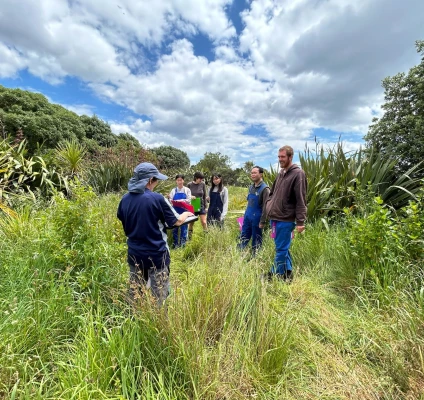
Karla Beazley (Ngāti Te Ata, Waiohua) Following the discovery of a midden in Roskill South in 2021, Karla Beazley serves as the project lead on an ongoing collaboration between mana whenua and May Road School, around the archaeology, history and geology of Puketāpapa / Pukewīwī / Mount Roskill and the surrounding whenua. With the goal of May Road School pupils feeling better connected to the whenua that they call home, this project is interdisciplinary and intertwined with the school’s curriculum, producing an education programme that places students on the maunga, to learn, connect, and celebrate the whenua. This research is currently ongoing. |
 |
Hinewaimarama Reihana-White (Ngāti Whātua, Ngāti Maniapoto, Ngāti Hineāmaru) A PhD candidate at Waipapa Taumata Rau University of Auckland, Hinewaimarama Reihana-White’s research explores the connections between Ōwairaka Maunga / Te Ahi-kā-a-Rakataura and Te Waiunuroa o Wairaka, an aquifer-fed puna that emerges on the Unitec Wairaka campus, sourced from the basalt aquifer beneath the maunga. The focus of this research is to explore how Ōwairaka, its basalt aquifer, and the puna Te Waiunuroa o Wairaka are connected as sources of waiora (health). Reihana-White’s research aims to strengthen ecological knowledge while upholding cultural values and demonstrates how Indigenous frameworks can guide environmental practice. This research is currently ongoing. Read more about Hinewaimarama’s work here.
|

For more information about any of the participants work, please contact us at [email protected].
The residency is open to individuals working on projects about or related to the Tūpuna Maunga. Projects can be new or ongoing, and come from a wide range of fields, including creative arts, literature, social sciences, and applied sciences.
Applicants to the Tūpuna Maunga Authority Research Scholarship are encouraged to apply.
Applications can be submitted in Te Reo Māori and / or English.
Timeframe
• Applications open: 29 June 2026
• Applications close: 11:59 pm, 30 August 2026
Who is eligible?
• You must be a New Zealand citizen or permanent resident.
• Your project must relate to the Tūpuna Maunga.
What the residency includes
• Accommodation at the Michael King Writers’ Centre for two weeks (dates are flexible)
• A stipend paid at the living wage for two weeks
What your application must consider
• The value of the project to the Tūpuna Maunga, including how it enhances the mana and wellbeing of the maunga
• How mana whenua are included, considered, or will benefit from the project
Expectations of residency recipients
• Follow any rules set by the Michael King Writers’ Centre during the residency period
• Submit an end-of-stay report at the conclusion of the residency
Apply through SmartyGrants
Submit your application via SmartyGrants.
Contact the TMA Permit Coordinator if you need advice on your application.
Documents to supply with your application
It is important to provide all requested information as part of your application so that we can process it efficiently.
| Residency | |
| Project Plan | We will ask you to discuss your project plan within your application |
| Site Map | Yes, if known, and if your project included physical interaction with the Maunga |
| Health and safety plan | Will be required if your application is successful, and if your project included physical interaction with the Maunga |
| Waste management plan | Will be required if your application is successful, and if your project included physical interaction with the Maunga |
| Letters of support or consultation | Not required, but can be included if they are beneficial to the application |
| Examples of previous work | Yes, if relevant to your application |
| Associated permits or regulatory approvals | If instructed by the permit coordinator |


